
ANCAP Safety Ratings are Changing - Implications for Transport Safety
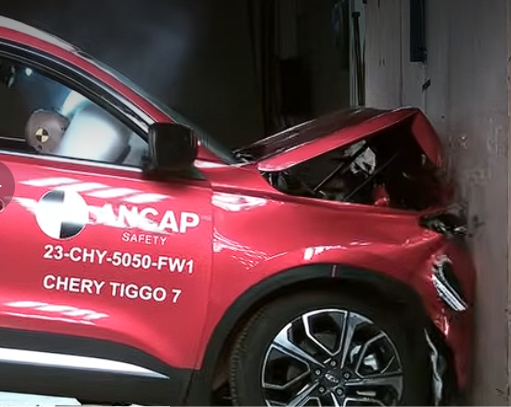
ANCAP, the independent body responsible for new vehicle safety ratings in Australia and New Zealand, has announced major changes to its assessment framework from 2026. While ANCAP is not a regulator, its ratings strongly influence vehicle specifications, market supply, and consumer choice — with direct implications for transport safety outcomes.
How ratings work now
Vehicles are currently assessed across four pillars:
Adult occupant protection
Child occupant protection
Vulnerable road user protection (pedestrians and cyclists)
Safety assist (crash avoidance technologies)
To achieve a star rating, vehicles must meet minimum thresholds across all categories, meaning performance is constrained by the weakest area. Importantly, star ratings reflect the standards in place at the time of testing and do not imply equal performance across all safety dimensions.
What’s changing from 2026
ANCAP is moving to a “Stages of Safety” framework, covering:
Safe driving
Crash avoidance
Crash protection
Post crash response
This shift places greater emphasis on preventing crashes, including real world performance of driver monitoring systems and autonomous emergency braking under challenging conditions (e.g. night-time or poor weather). It also expands assessment of post-crash outcomes, such as emergency access, EV battery isolation and automated emergency notifications (e.g. eCall).
Transport implications
Associate Professor and Principal Fellow in Urban Risk and Resilience, The University of Melbourne, Milad Haghani, says the changes are broadly positive, particularly the stronger focus on crash avoidance and post crash response. However, he says there is a risk that vulnerable road user protection becomes less prominent within a more complex framework.
Associate Professor Haghani suggests this is significant given:
• Pedestrian fatalities have increased despite improvements in occupant safety
• Vehicles are becoming larger and taller, increasing injury risk for people outside the vehicle
• International evidence shows weaker safety outcomes where vulnerable road user protection is not strongly prioritised
For transport agencies, the key challenge will be ensuring that safety ratings continue to clearly and visibly reflect risks to pedestrians and cyclists, alongside advances in vehicle based crash prevention.
